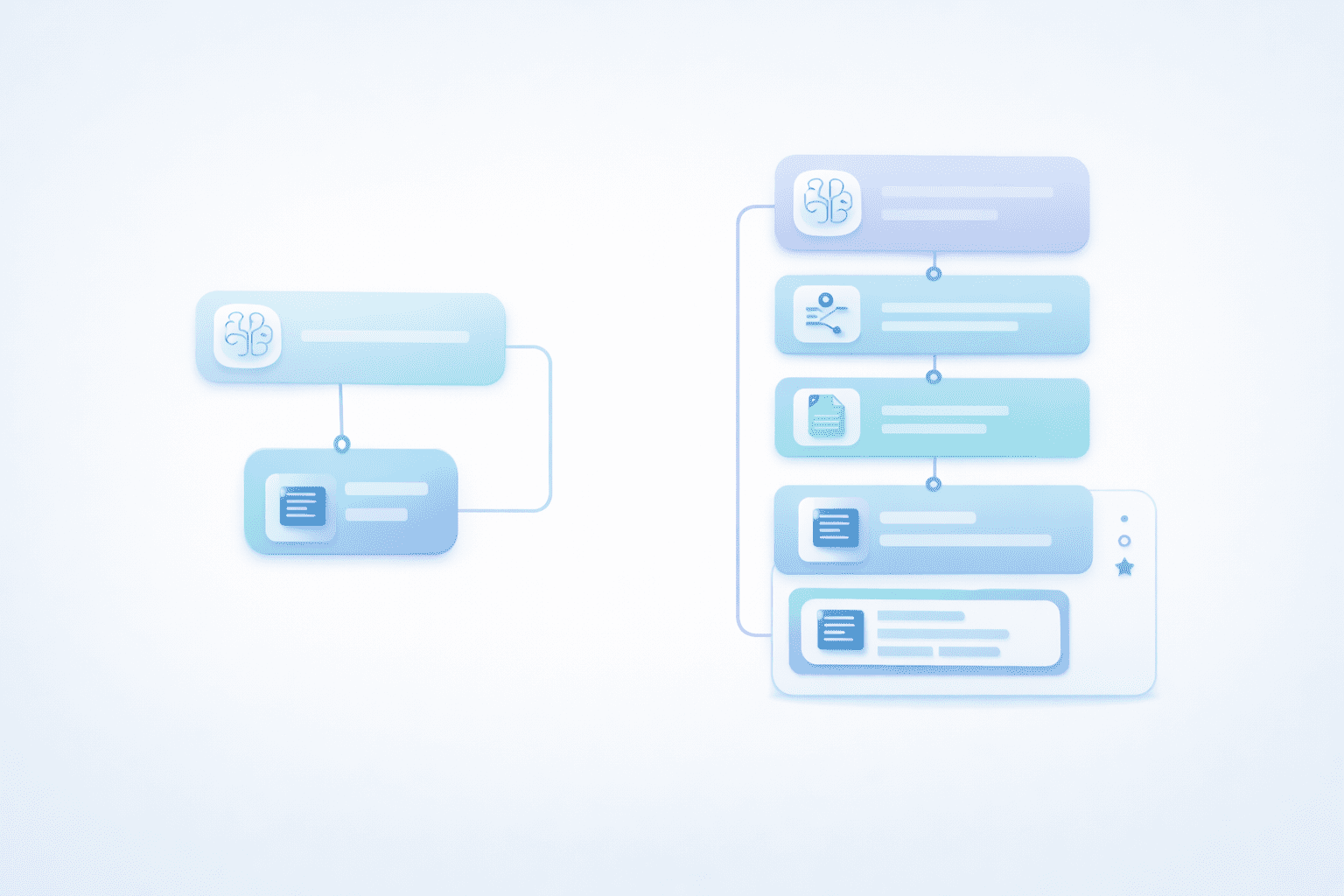
If you’re learning prompt engineering basics, one of the most important things to understand is the difference between a prompt vs command. Many beginners use these terms interchangeably. However, in AI tools like Chat GPT, Claude, and other language models, a prompt is not the same as a simple command. Understanding this difference between prompt and command in AI can significantly improve your results. Let’s break it down in simple terms.

What Is a Command in AI?
A command is a short, direct instruction.
It tells the AI to do something — but without much detail.
Examples of Commands:
- “Write an email.”
- “Summarize this.”
- “Translate this text.”
- “Create a blog title.”
Commands are:
- Short
- Direct
- Minimal context
- Often generic
Because they lack detail, the AI must guess what you really want. That usually leads to average or basic outputs.
What Is a Prompt in AI?
A prompt is a structured and detailed instruction.
It gives the AI context, expectations, tone, format, and purpose.
Instead of telling the AI what to do, a prompt explains:
- What the goal is
- Who the audience is
- What format to use
- What tone to follow
- What constraints to consider
Example of a Prompt:
Instead of:
“Write an email.”
You write:
“Write a professional follow-up email to a client who hasn’t responded in 5 days. Keep the tone polite and confident. Limit it to 120 words.”
That’s a prompt — not just a command.
And the output quality changes dramatically.
Prompt vs Command: Key Differences
Let’s compare them clearly.
1 Structure
Command: Simple instruction
Prompt: Structured guidance
2 Detail Level
Command: Minimal information
Prompt: Clear context and expectations
3 Output Quality
Command: Generic result
Prompt: Targeted and refined result
4 Control Over AI Output
Command: Low control
Prompt: High control
In prompt engineering for beginners, learning how to move from commands to structured prompts is a major skill upgrade.
Why This Difference Matters in AI Tools
When using AI tools like ChatGPT, the model predicts text based on patterns.
If your input is vague, the AI fills in the gaps.
If your input is structured, the AI produces more accurate, useful results.
That’s why understanding prompt vs command in AI tools is essential for:
- Content creators
- Students
- Developers
- Business professionals
- AI automation learners
The more detailed your input, the better the output.
Simple Real-World Example
Let’s see how prompts affect AI output in a practical scenario.
Command:
“Write Instagram captions.”
Output:
Generic short captions.
Prompt:
“Write 5 Instagram captions for a productivity blog targeting students. Use motivational tone and keep each caption under 20 words.”
Output:
Targeted, useful, audience-specific captions.
This demonstrates the real difference between structured prompts vs simple commands.
When Should You Use a Command?
Commands can still be useful when:
- You need quick rough ideas
- You want brainstorming suggestions
- You are experimenting
- Speed matters more than precision
However, for professional-level work, prompts are always better.
How to Turn a Command into a Better Prompt
Here’s a simple formula:
Command + Context + Format + Tone + Constraints = Prompt
For example:
Command:
“Explain prompt engineering.”
Prompt:
“Explain prompt engineering in simple terms for beginners. Use bullet points and keep it under 300 words.”
Small changes → Big improvements.
Final Thoughts: Prompt vs Command in AI
The difference between prompt vs command may look small — but it completely changes AI performance.
A command tells the AI what to do.
A prompt tells the AI how to think.
If you want better results from AI tools, start structuring your instructions properly. At AI Unite, we focus on practical prompt engineering tutorials that help beginners move from simple commands to advanced structured prompts step by step.
Call to Action
At AI Unite, we don’t just explain AI concepts — we teach you how to apply them in real workflows.
If you’re serious about improving your AI results:
- Explore our Prompt Engineering Basics series
- Learn structured prompting step by step
- See real examples that improve output quality
- Avoid beginner mistakes that waste time
Our goal is simple:
Make AI learning practical, beginner-friendly, and actionable.
👉 Start exploring the Prompt Engineering roadmap on AI Unite and improve your AI skills with clarity and confidence.
1 What is the difference between a prompt and a command in AI?
A command is a short instruction given to an AI tool, such as “Write an email.”
A prompt is a detailed and structured instruction that includes context, tone, format, and goals. Prompts produce more accurate and higher-quality results.
2 Why do structured prompts give better results than commands?
Structured prompts reduce ambiguity. When you give AI more context, constraints, and formatting instructions, it understands your expectations better and generates more relevant output.
3 Is a command always bad in AI tools?
No. Commands are useful for quick brainstorming or simple tasks. However, for professional content, automation, or structured outputs, prompts are far more effective.